

Reciprocating Feeder
Movers India manufactures heavy-duty reciprocating feeders for controlled feeding of large, abrasive lumps ahead of primary crushers.
What is a Reciprocating Feeder?
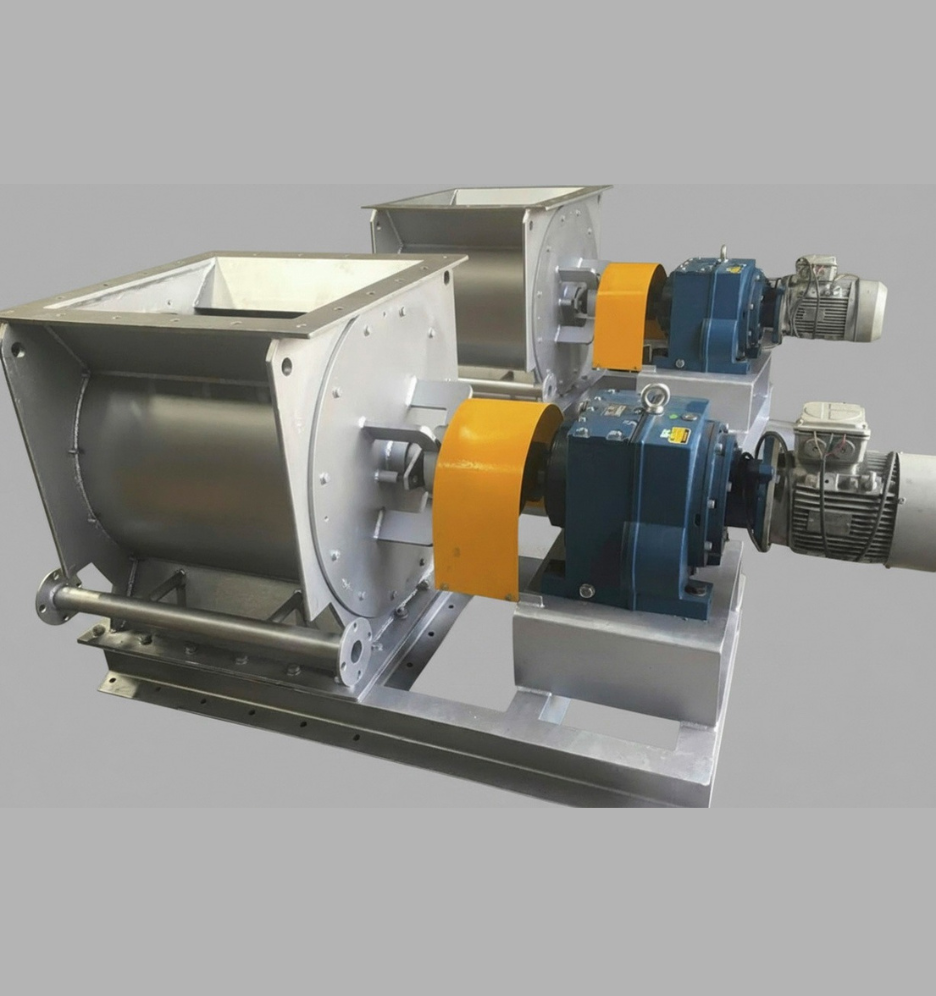
A reciprocating feeder is a heavy-duty feeding device that uses a back-and-forth pan motion to push bulk material from a hopper toward a crusher or conveyor at a controlled rate.
How It Works
A pan mounted beneath the hopper moves in a repeated back-and-forth stroke, pushing a metered amount of material forward with each cycle to maintain a steady, controlled feed rate.
Materials & Industries Handled
Reciprocating feeders handle large lumps and non-free-flowing, abrasive materials such as cement raw material, ore, coal, and limestone.
Technical Specifications
| Parameter | Range |
|---|---|
| Capacity | Up to 500+ TPH |
| Max Feed Size | Up to 1,000 mm lumps |
| Pan Width | 1,000–2,500 mm |
| Stroke Range | Adjustable, per feed rate requirement |
Key Features & Benefits
Handles large, non-sticky lumps other feeders can’t: its heavy-duty pan design withstands large lump impact that would damage belt or screw-type feeders. Adjustable stroke and speed for controlled feed rate: stroke length and speed can be adjusted to fine-tune the feed rate to downstream equipment. Heavy-duty construction: built for continuous, demanding duty directly ahead of primary crushers. Low maintenance, high safety factor: a robust design with a high safety factor keeps maintenance needs low even under heavy loading.
Where It's Used in the Process
Reciprocating feeders are typically installed directly beneath the primary hopper, feeding large raw material lumps into the primary crusher at a controlled, steady rate.
Reciprocating Feeder vs. Apron Feeder vs. Vibrating Feeder
| Feature | Reciprocating Feeder | Apron Feeder | Vibrating Feeder |
|---|---|---|---|
| Best for | Very large lumps, high-impact loading | Heavy, abrasive material, large lumps | Fine to medium, free-flowing material |
| Feed Motion | Back-and-forth pan stroke | Continuous chain/pan movement | Vibration |
| Typical Placement | Ahead of primary crusher | General heavy-duty feeding | Screening/general feeding |
How to Choose the Right Reciprocating Feeder
Selection depends on your maximum feed lump size, required capacity, material abrasiveness, and the stroke and speed adjustability you need for feed control. Our engineering team can match stroke, pan width and construction to your crusher and process.
Why Choose Movers India
With in-house manufacturing since 1979 and proven execution across nine countries, our reciprocating feeders are built for reliable, heavy-duty feeding performance ahead of your crushing circuit. Each industrial reciprocating feeder is built for the lump size and abrasiveness of the material it will actually see.
FAQs
A reciprocating feeder can handle very large lumps, typically up to around 1,000 mm, making it suitable for raw material straight from blasting or quarrying that would be too coarse for most other feeders.
A reciprocating feeder uses a back-and-forth pan stroke to push material forward, built to withstand heavy impact from very large lumps. A vibrating feeder instead uses vibration to move material, which suits finer to medium, free-flowing material but isn’t designed for the same scale of high-impact lump loading.
A reciprocating feeder is typically installed directly beneath the primary hopper, feeding raw material into the primary crusher at a controlled rate.
Yes both stroke length and speed can be adjusted to fine-tune the feed rate for different materials and downstream capacity requirements.
Ask Our Team
Have a question? Send us a message and we’ll get back to you.
Request a Quote
Talk to our engineering team about your reciprocating feeder requirement.