

Rotary Valve
Movers India manufactures rotary valves for reliable airlock feeding and controlled discharge of bulk materials.
What is a Rotary Valve?
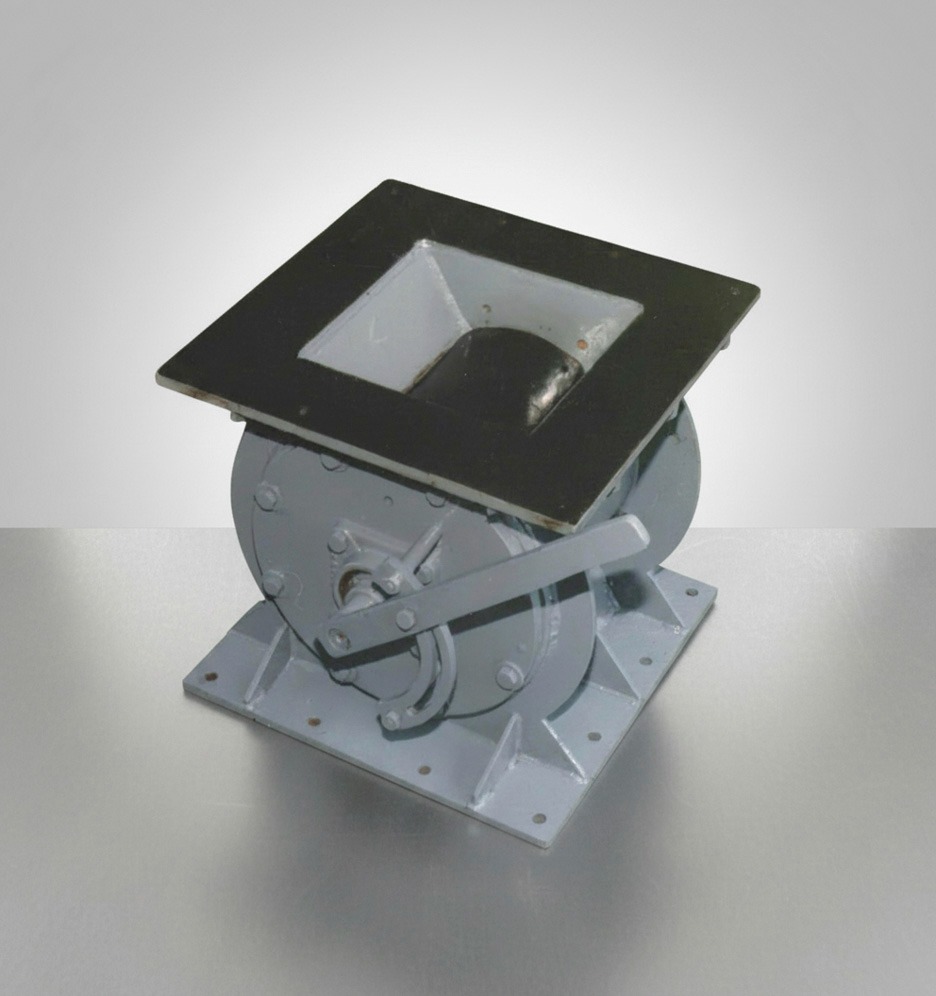
A rotary valve (rotary airlock) is a mechanical device that regulates the flow of bulk material between two points while maintaining an air seal between them. Depending on the application it is also called a rotary airlock valve, a rotary vane feeder or a rotary cutoff valve.
How It Works
A rotor fitted with vanes turns within a close-fitting housing, capturing material in each pocket at the inlet and releasing it at the outlet, while the rotor’s tight clearance maintains an air seal between the two sides.
Materials & Industries Handled
Our rotary valves handle cement, fly ash, minerals, powders, and other bulk solids across process industries.
Technical Specifications
| Parameter | Range |
|---|---|
| Capacity | Up to 100+ TPH |
| Size Range | 150–500 mm inlet/outlet |
| Pressure Rating | Suited to low to medium pressure differentials |
Key Features & Benefits
Our rotary valves provide reliable airlock function with minimal air leakage, a wear-resistant rotor for long service life, and a low-maintenance design.
Available Types / Configurations
We offer drop-through designs for gravity feed applications and blow-through designs for pneumatic conveying systems, with different rotor types available to suit material characteristics.
Why Choose Movers India
With in-house manufacturing since 1979 and deep process equipment expertise, our rotary valves are built for dependable, low-maintenance operation within your material handling system. As a rotary feeder manufacturer we supply these valves for both gravity and pneumatic duty.
FAQs
In a cement or process plant, a rotary valve is used to feed material into or discharge it from equipment operating under pressure or vacuum such as bag filters, silos, or pneumatic conveying lines while maintaining an airlock between the two sides.
We offer rotary valves with capacities up to 100+ TPH and inlet/outlet sizes ranging from about 150 to 500 mm, sized to match your specific feed or discharge requirement.
The rotary valve minimizes air leakage through the tight clearance between its rotor vanes and housing, which keeps each material pocket sealed as it rotates from inlet to outlet, limiting the passage of air between the two sides.
Yes rotary valves can be customized with wear-resistant rotor and housing materials for abrasive duty, or heat-resistant construction for high-temperature applications, based on your site conditions.
Ask Our Team
Have a question? Send us a message and we’ll get back to you.