
Rotary Kiln
Movers India designs and manufactures rotary kilns for clinkerization and other high-temperature process applications.
What is a Rotary Kiln?
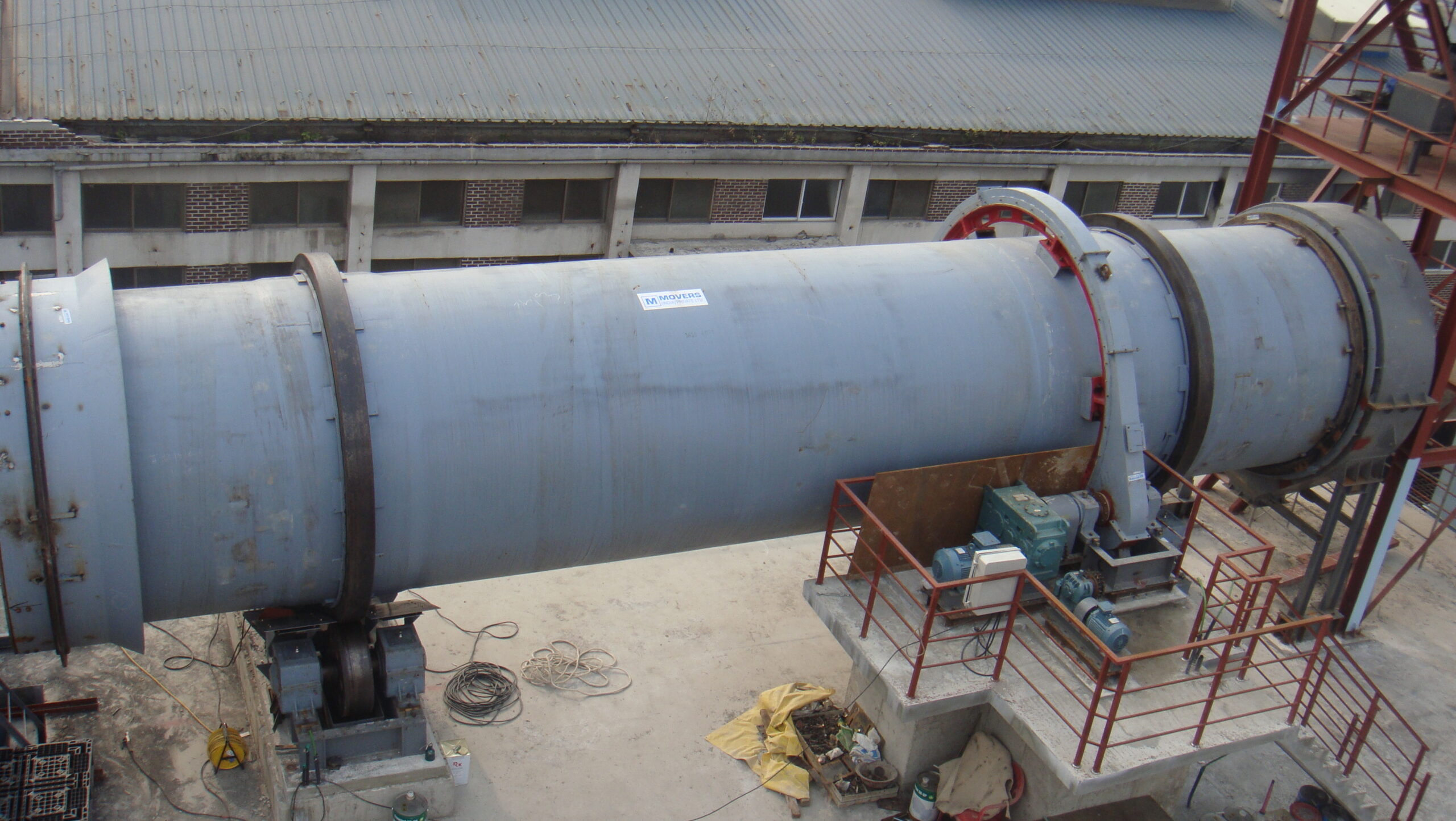
A rotary kiln is a long, slightly inclined rotating cylindrical vessel that heats material to high temperatures for chemical reactions such as clinkerization or calcination.
Applications & Materials Handled
Our rotary kilns are used for cement clinkerization, sponge iron production, pet coke calcination, and processing bauxite, iron ore, and lime sludge.
Technical Specifications
| Parameter | Range |
|---|---|
| Length-to-Diameter Ratio | ~30:1 to 40:1 |
| Specific Heat Consumption | ~750–900 kcal/kg clinker |
| Drive Type | Girth gear with pinion / hydraulic drive |
Key Design Features
Our kilns feature reliable inlet and outlet sealing, a hydraulic thruster for axial control, robust support roller stations, and an adjustable throat for process optimization.
Kiln Sealing Systems
We provide inlet seals and discharge seals to minimize false air ingress, along with a nose ring fan to cool the discharge end and protect the seal assembly.
Process Control & Automation
Our rotary kilns can be equipped with automation and control systems for temperature monitoring, drive speed, and process parameter management to ensure stable operation.
Industries & Applications
Rotary kilns from Movers India serve the cement, sponge iron, and mineral processing industries requiring reliable high-temperature processing. In cement, they are used in our integrated plants from 600 to 1,500 TPD. In a rotary kiln cement plant, the kiln is the single piece of equipment that determines both clinker quality and fuel cost.
Why Choose Movers India
With in-house manufacturing since 1979 and an international execution record across nine countries, our rotary kilns are engineered for durability and consistent process performance. Among rotary kiln manufacturers in India, few also execute the complete plant the kiln sits inside.
FAQs
Besides cement clinker, our rotary kilns can process sponge iron, calcine pet coke, and handle bauxite, iron ore, and lime sludge for various industrial applications.
Our rotary kilns typically have a length-to-diameter ratio in the range of about 30:1 to 40:1, depending on the specific process and capacity requirements.
Yes the kiln can be designed to run on alternative fuels or fuel blends in addition to conventional fuel, depending on availability and project requirements.
False air entry is minimized through dedicated inlet and discharge sealing systems that maintain a tight interface between the rotating kiln shell and the stationary housing, supported by a nose ring fan at the discharge end to further protect the seal assembly.
Ask Our Team
Have a question? Send us a message and we’ll get back to you.